Chatter
| Volume 72 No. 6 |
June, 2026 |
|---|
Editor’s Notes
Due to my usual long summer vacation in Canada, the July
Chatter issue will be a little early than usual (and might
be a little shorter); the August issue might be a little later.
I will not be able to attend the July meeting remotely, but please
email to me the usual meeting reports as soon as they are ready,
because I will have little time after my return to ask for items
or clarifications before putting together the August issue.
Paul Hybert, editor
Minutes of the 1288th Meeting
The 1288th meeting of the Chicago Coin Club was called to order by
President Melissa Gumm at 6:46pm CDT Wednesday, May 13, 2026.
This was an in-person and online meeting with 16 members and one
guest, applying for membership, present at the CBA, and 16 members
and one guest, our presenter, online for a total of 34.
Club Meeting Minutes
The April club meeting minutes, for both Sessions I & II, were
approved as published in the Chatter, both in print and on
the CCC website.
New Memberships
Secretary Scott McGowan completed the second membership application
readings for both John Wagner of Oswego, Illinois who collects
early US coins and American Silver Eagles, with CCC being his first
numismatic club, and Joe Dlouhy of Berwyn, Illinois who collects
anything numismatic, is a member of the Hillside Coin Club, and is
referred by Bob Feiler.
The club membership approved both membership applications.
The first membership application reading was completed for Angelo
Pierucci of Park Ridge, Illinois, a collector of US Coins and
Italian Coins, who is a member of the ANA and CSNS.
Treasurer’s Reports
January 2026: Revenue $80.00 (Dues); Expenses $114.00 (Corp Fee,
Auction reimburse); for total of −$34.00.
February 2026: Revenue $1,272.65 (Dues, Life Membership, Banquet,
Auction); Expenses $1,729.99 (Postage, Printing of Chatter,
CBA room rent, AV equipment/consulting, Webex License); for a
total of −$457.34.
March 2026: Revenue $140.00 (Dues); Expenses $305.00 (Chatter
print/postage, CSNS case rental, CBA Room Rent); for a total of
−$165.00.
April 2026: Revenue $700.00 (Dues, Club material sales, Banquet);
Expenses $0; for total of $700.00.
Old Business
-
Committee Reports:
-
Special Projects Committee:
Only report is for a sound volunteer as mentioned in New Business.
-
Hall of Fame Committee:
Please send any recommendations to the committee.
-
Legacy Project:
No Report.
-
Central States Numismatic Society Convention review – Scott
reported lots of activity at the CCC booth, collected dues from
many members, several club materials were sold.
The CCC meeting was attended by 58 people for the presentation on
“Morse Code on Money” by Tom Uram.
-
Melissa reminded the club membership that membership dues for 2026
are past due if not yet paid.
-
CCC-NYNC joint club dinner at this year’s ANA on Wednesday,
August 26, 2026 at the Allegheny Harvard Yale Princeton Club,
walking distance from the Convention Center.
A buffet dinner for $60 per person.
Prepaid reservations only.
Send your payment to the CCC treasurer.
New Business
-
Request for a sound volunteer to attend meetings in person but use
a laptop and headset to monitor sound and visual quality.
-
A presentation was made to the CCC membership for approval to
spend up to $1500 on a new laptop computer and related software,
which was put to a vote and approved.
Lyle Daly also asked club members if they have recommendations of
places to buy the equipment other than the usual big box stores.
-
President Melissa Gumm announced that she appointed Lyle Daly to
the position of CCC Treasurer to replace Elliott Kreiter who is
retiring, and the appointment had been approved by the CCC board.
-
President Melissa Gumm announced there will be a review of the
CCC Constitution and By-Laws.
-
Mark Wieclaw raised the topic of the 1300th meeting which is a
year from now, May 2027.
Typically, CCC will commemorate milestone meetings with a medal
or banquet.
Mark will look at forming a committee to discuss ways to
commemorate our 1300th meeting.
Featured Program
Thomas J. Sparks on A Mighty Talk for the Mighty Eighth.
Following the presentation Deven Kane said a CCC speaker’s
medal and ANA education certificate will be sent to Thomas.
Show and Tell
Second Vice President Ray Dagenais announced the evening’s
eight Show and Tell presentations.
Ray reminded the club that in the summarizing of points for the
show and tell, presenters receive extra points per presentation
after giving five presentations.
Lyle Daly and Deven Kane thanked the remote attendees for their
understanding and patience though the audio issues during the
WebEx meeting broadcast.
President Melissa Gumm reviewed upcoming numismatic events, then
adjourned the meeting at 9:19PM.
Respectfully submitted,
Scott McGowan, Secretary
Speaker’s Wor[l]d
A Mighty Talk for the Mighty Eighth
presented by
Thomas J. Sparks
to our May 13, 2026 meeting
Tom Sparks, founder of the Short Snorter Project, has set up
displays of Short Snorters at some recent ANA shows, most
recently at Savannah, Georgia in late February.
A few days before that show he gave a presentation, on the
history of the short snorter tradition and the 8th Air
Force-related snorters in his collection, at the National
Museum of the Mighty Eighth Air Force in Pooler, Georgia.
After that show, he donated some of his exhibits to that
museum.
At its simplest, a Short Shorter is a piece of paper money
signed by people of a group of people from the same unit or who
shared an experience.
Pieces can be found in the stock of dealers in paper money, in
the collections of other collectors, or in estate sales.
For Tom, acquiring a signed note is just the start; identifying
any mentioned date and location, followed by identifying the
people who signed the note, provides a framework for the effort
that follows.
What are the stories of the signers?
Obtain photographs.
What event tied them together?
Once Tom has sufficient details, he will build a panel around
the note, telling the stories of the event and participants.
Tom showed notes from a wide range of units and experiences,
but most were from either the Army Air Corp or from high ranking
Army officers and their staff.
Of the shown notes, some were signed by the crew of a single
bomber, some were signed by a fighter pilot and his flight
crew, while others were signed by the fighter pilots of a
squadron.
One note was signed by 20 POWs liberated from Stalag Luft III,
with some signers listing their krieg identification
number; its panel traced their return to the US.
Some of the pilot stories were short, killed in action soon
after signing the note.
The longer stories came from bomber crews that completed their
tour.
Tom cannot predict what stories a newly acquired note will tell
– one note was signed by a bomber pilot who rotated out
before Tom’s uncle became the bomber’s pilot.
A set of four panels showed the notes of Sergeant Michael
McKeogh, the personal orderly to General Eisenhower; the notes
bear the signatures of many generals and dignitaries.
Tom showed a picture from McKeogh’s wedding in the
Pallace of Versailles on December 16, 1944; Eisenhower had to
leave the reception early because German forces had attacked
American lines earlier that day, starting what is now called
the Battle of the Bulge.
Many more panels were shown than described here; they tell many
stories that should be remembered.
Tom Sparks plans to display some of his collection and panels
at the ANA’s upcoming World’s Fair of Money to be
held in Pittsburgh late this August.
Time spent looking at his material and hearing him talk about
Short Snorters will be time well spent.
Current Advertisers
Show and Tell
Items shown at our May 13, 2026 meeting,
reported by Ray Dagenais.
-
Richard Hathaway
likes the older French coins.
-
A 1719-D (Lyon mint) Écu of France; this is the Écu
with the quartered shields of France and Navarre, an early
18th-century type that reintroduced the arms of Navarre onto
French coinage.
Although the Kings of France called themselves the “Kings
of France and Navarre” after Henri of Navarre became king
of France in 1589, most French coinage of the early 1700s
featured only the arms of France.
Richard is not sure why the Navarrese shield returned on this
type, which was struck primarily in 1718 and 1719, before
reverting to the arms of France.
This issue coincided with a monetary reform in which the
écu was raised from 5 livres to 6 livres and the diameter
was reduced to 38mm.
This example is in excellent Extremely Fine condition, with
strong detail throughout, but with die corrosion around parts
of the reverse legend.
-
A recent catalogue, from CGB.fr, showing many attractive early
French coins.
-
Noah Graf
shared two tiny Byzantine bronzes of the 6th century.
-
A 5 nummis coin of Antioch featuring the first instance, on a
Byzantine coin, of dual busts on a bronze coin.
From the 5-month joint reign of the Emperor Justin I and his
nephew/adopted son Justinian, the coin features their busts.
While the dual legend is mostly illegible on the example Noah
displayed, the reddish desert deposits over a dark green
patina still make for a remarkably nice appearance on a very
tiny flan.
The reverse features the denomination (ε = 5) and the
shrine of the “Tyche of Antioch,” a pagan goddess
representing good fortune, and a patron of the City of Antioch
– an unusual feature on coinage in an already mostly
Christianized era, emphasizing that local civic pride
transcended religion, even in the 6th century.
-
A decanummium of the Emperor Maurice, minted about sixty years
later.
Maurice was a master administrator and moderately successful
military commander, but his policies of peace with Persia, strict
fiscal discipline, and a failure to ingratiate himself with the
military slowly made him unpopular, eventually culminating in his
violent overthrow and the brutal murder of his entire family.
This example is almost perfect – a pleasing green patina;
the emperor’s figure is fully visible, well detailed, and
perfectly centered; and the legend is entirely on the flan
and legible.
The reverse contains the denomination (Ι = 10), the regnal
year 8, and the mintmark.
Struck in Catania, the Byzantine capital of the island of Sicily,
this coin also adds to Noah’s growing, if unintentional,
collection of small Sicilian bronzes.
-
Robert Leonard
started with a 1956 postage stamp of Saint Christopher-Nevis-Anguilla
islands showing the location of the three islands, with Anguilla
separated from the other two by two Dutch islands.
He also showed and talked about two 1960s brochures giving the
common name of St. Kitts-Nevis-Anguilla, before showing a
counterstamped coin for each island.
-
A contemporary forgery of a “black dogg” (11⁄2
pence) with “SK” (false) for St. Kitts counterstamped
on a Cayenne 2 sous, 1782 Paris, circa 1809-1812.
-
“NEVIS” in relief within an oblong indent
counterstamped on a Cayenne 2 sous 1780-1789: “black
dogg” (11⁄2 pence).
It is from the Howard Gibbs collection.
Bob explained that Nevis is the birthplace of Alexander
Hamilton, he of the musical.
The house was destroyed by a hurricane long ago, but there is a
plaque and a small museum.
Bob suggested that if your cruise calls at St. Kitts, skip the
tourist traps there and head to the ferry terminal and take the
ferry to Nevis.
A cab driver will take you to the Hamilton museum, and you can
eat lunch in charming Charlestown before taking a taxi back to
the ferry terminal.
This is the real West Indies.
-
A 1952 Mexico 5 pesos counterstamped on obverse with
“ANGUILLA•/ LIBERTY DOLLAR” around “JULY/
11/ 1967” [black ink in lettering], to raise funds to
finance independence for Anguilla.
About 11,600 mixed dollar-size coins were counterstamped, with
about 2,000 to 3,000 actually sent to Anguilla to be sold at a
surcharge.
This exhibit was prompted by the sale earlier this month, in a
Dan Sedwick auction, of an Anguilla Liberty Dollar for a
mind-blowing $4,500 – one of only two using a 1911 British
Dollar as a host coin.
(Apparently, someone is trying to complete a set of all host coin
types.)
Another one was offered at auction last week, on a Mexican host
coin similar to this one, with a starting price of $50 Canadian
– less than melt.
-
Jeff Rosinia
just returned from his first continuous trip on Route 66, in its
hundredth year, travelling from Chicago to Los Angeles.
He acquired many non-numismatic souvenirs along the way.
-
A group of large auto-themed colorized medals given as awards to
finishers of the 2009 and 2013 Annual Williams Route 66 Marathon
in Tulsa, Oklahoma.
These marathons followed in the tradition of the “Bunion
Derby,” a transcontinental footrace from Los Angeles to New
York in 1928, initiated by promoter Charles Pyle to highlight the
route.
-
A 2026 half dollar with a Route 66 sticker on one side, one of
many such pieces Jeff had made for his trip.
-
Lyle Daly
showed a coin, a book, and a note.
-
An imitative coin of Phillip II of Macedonia, minted by the
Dacians sometime between 300 and 200 BC.
The specimen is a “Kinnlos” or chinless type, where
the obverse has a stylized head of Apollo without a chin.
The reverse presents a stylized rider on a duck billed hobbled
horse.
While imitative of a Macedonian coin, the specimen exhibits a
pelletized mane on the horse and stylized rider, similar to
Celtic Kugelwange coins.
-
A single volume of a four-volume set on money of the Gauls by
Louis-Pol DeLestree and Marcel Tache.
Lyle noted that additional volumes were available but could not
be shipped from Europe due to customs issues.
-
An advertising note for the Kinsell shoe store, featuring a rebus
on the reverse.
This is similar to a piece featured in a past issue of the
Numismatist.
-
Deven Kane
showed three coins.
-
An bronze coin of King Rhoemetalces I (15 BC to 12 AD) and his
Queen, Pythodoris, from the Kingdom of Thrace.
The heads of the King and Queen are on the obverse and Emperor
Augustus on the reverse.
Rhoemetalces was a loyal ally of Augustus, who returned the
kingdom to Rhoemetalces’s family following a revolt by the
Bessi tribe.
Queen Pythodoris is identified as his wife and the mother of his
heir through this numismatic evidence.
-
A silver 3 Kreuzer coin struck in 1630 at the Royal Mint of Silesia
in Breslau, of the Holy Roman Emperor Ferdinand II.
The coin depicts the Emperor on the obverse and the crowned
double-headed imperial eagle on the reverse.
-
A silver Persian Rupi minted in Isfahan in 1153 AH (circa
1740/1741 AD) under Nader Shah.
Nader Shah rose to power after the fall of the Safavid Empire,
eventually making himself Shah in 1736.
He is known for his military campaigns, including the 1739 sack
of Delhi where he captured the Peacock Throne and the Koh-i-Noor
diamond.
His reign ended in 1747 when he was assassinated in his tent at
Quchan by conspirators among his own guard.
-
Mark Wieclaw
started with books acquired at the May meeting of the Will County
Coin Club and ended with an ancient coin.
-
Coin Collectors, Golden Anniversary Edition, the 2014 2nd
edition by Whitman Publishing.
This contained two pieces of correspondence between Dr. Claude
Davis and Christine Karstedt of American Numismatic Rarities, LLC.
Dr. Davis was looking for two auction catalogues and asked her to
send them to him.
-
The Cardinal Collection, one of the auction catalogues that
Dr. Davis was looking for.
Mark then talked about the US type set of Copper, Nickel, and
Silver coins that Davis assembled.
The Foxfire Collection was the finest such collection ever put
together, and was later sold intact to D. Brent Pogue in 2005.
A Chicago Coin Club connection was made when Richard Burdick, an
agent for Dr. Davis, was identified as someone who joined the CCC
in February, 2014.
-
A very heavy antoninianus of Salonina, wife of Gallienus (253-268
AD) weighing 6.66 grams versus a normal 3.3-3.6 grams.
Interestingly, a significant portion of the reverse is missing.
The auction catalogue description states that two coin blanks
fused together and then a piece of one broke away during striking.
-
Continuing his theme of Bosnia,
Tyler Rossi
showed a meal voucher (bon za obrok) issued by DP Rudnik
mrkog uglja u Zenici.
The socially-owned Zenica Brown Coal Mine was founded in 1880 and
located in central Bosnia and Herzegovina.
It is one of the parallel bonovi that defined Bosnian
monetary life during the 1992-1995 war.
The Zenica mine, working the Stara jama and
Raspotočje underground pits, employed roughly 3,000
workers at wartime peak (compared to 607 today).
Zenica remained under ARBiH 3rd Corps control throughout the war
and absorbed an estimated 40,000-50,000 internally displaced
persons.
Each bon za obrok was redeemable for one meal (obrok)
at the company canteen.
Surviving examples are scarce; enterprise bonovi were
typically destroyed on redemption.
Reminders:
-
You can email to Ray a description of what you will
show at a meeting, to give him a start on this write-up.
-
Send it to cccshowandtell@gmail.com
-
After a meeting, all members who viewed the meeting should
email him their scoring sheet – a listing of each
exhibit number followed by a score (from a low of 1 to a high of
10) is all that is needed.
Speaker’s Wor[l]d
Morse Code on Money
presented by
Thomas Uram
to our April 25, 2026 meeting
This talk was about communications, illustrated with examples of
some coins and types of codes.
Tom’s brief history of early communications (well after
smoke signals) started with an early relay network system used in
the western US – the Pony Express which started in April,
1860.
Operating out of a string of stations extending from Missouri to
California, it took 10 days for a letter to travel the entire
route.
Tom showed a recruiting flyer, seeking young orphans looking for
adventure.
The transcontinental telegraph was completed in October, 1861;
two days later the Pony Express was disbanded.
In 1831, Joseph Henry demonstrated an electromagnetic means of
communication by ringing a bell at the end of one mile of copper
wire.
The ensuing improvements by others followed many different paths:
one system used 26 lines, one line for each letter of the
alphabet; a German system used four wires.
Samuel Morse developed a primitive one-line system in 1837, had
a model using audible “dots” and “dashes”
in 1838, and had a system covering a two-mile length of wire in
1844.
Morse code uses a series of individual short- and long-duration
bursts to represent each character or symbol.
Many different media have been used to transmit Morse and other
codes, including sound, light, and line length or shape.
On the Canadian 5¢ coins of 1943-1945 struck on planchets
without any nickel, the Morse code for “we win when we
work willingly” appears as a series of dots and dashes
near the coin’s edge beading.
The Canadian 2010 silver $1 coin honoring the centennial of the
Canadian Navy and featuring HMCS Sackville, the last
Canadian WW2-era corvette, also has a message in Morse code.
Its translation is … left as an exercise for any
interested reader.
Although they do not seem to present any messsage encoded with
Morse code, Tom felt it appropriate to show the US $2 note of
the series from 1896.
This series, consisting of $1, $2, and $5 silver certifivates,
is popularly known as the Educational Series.
The back features busts of Fulton (of the first American
steamboat) and Morse, while the front features an allegorical
scene of a woman (science) presenting two youths (steam and
electricity) to two young women (commerce and manufacture).
Other numismatic items were shown; Tom reminded us that
communication continues to evolve; using the barcode as an
example.
He traced its history from the original 1949 patent application
by Woodland and Silver through the 1971 realization by IBM as
the Universal Product Code (UPC) – after the patent had
expired.
The first product scanned at a store, on June 26, 1974, was a
package of chewing gum.
To commemorate that long-ago transaction, Tom opened a case of
Juicy Fruit Gum and distibuted the packages to the
meeting’s in-person attendees.
The presentation concluded with audience comments on coding and
cryptography.
Copies of a pamphlet by Tom on this topic were distributed to
the in-person attendees; during the presentation, pages from the
pamphlet were shown to the remote attendees who watched live,
courtesy of the Newman Numismatic Forum.
The entire CCC
meeting,
including this presentation, is available
online, courtesy of the Newman Numismatic Forum.
Minutes of the Chicago Coin Club Board
May 6, 2026
The May CCC Board meeting was called to order by club president
Melissa Gumm at 7:01pm CDT and was an online-only meeting.
In attendance were Melissa Gumm, Deven Kane, Ray Dagenais,
Elliott Krieter, Scott McGowan, Paul Hybert, Bill Burd, Carl Wolf,
Steve Zitowsky, Mark Wieclaw, Tyler Rossi, Lyle Daly, and John Riley.
Old Business
-
Outstanding Tech issues, equipment purchases.
Lap top, Windows software, new microphone as approved at 2024 board
meeting.
Lap top purchase update, Enhanced hybrid feedback.
Approval to spend not more than $1500 to purchase a club notebook
computer and the appropriate software and peripherals to support the
hybrid meetings.
Board approved the $1500 expenditure to go to the club membership for
a vote at the May meeting.
Lyle also brought up the call for a sound tester at our club meeting:
to be in-person, using a laptop and headset to review sound and visual.
Scott also recommended we document the procedures for AV setup in
writing and have it available at CBA for systems setup and implementation.
-
Status of the Chatter advertising was discussed.
Secretary Scott sent reminder email to the one advertiser payment still
outstanding.
Scott indicated letters for the 2026-2027 advertising cycle will be
mailed out in mid-May.
-
Secretary Scott reported that the payment for the CCC to be an affiliate
member of the Ancient Coin Collectors Guild was completed and we are now
an official affiliate member.
This was a one-time payment only.
-
Scott and Ray did a brief review of CCC at the CSNS.
Good booth traffic, we sold some materials, collected dues, our meeting
was attended by 58, and CCC member Tom Uram gave a great presentation
on “Morse code on Money.”
Mark Wieclaw indicated NNP was showing images to the online attendees
that the room attendees did not see; it was reported that NNP was
showing pages of the handout from Tom at the meeting.
No medals were sold, Bill indicated we still have six 100th anniversary
medals and two with spots.
We did not get any new membership applications at the meeting.
-
Bill Burd reported on the Audit committee.
The official report: the audit committee met in March to review the 2025
financials; all revenue was accounted for and all expenditures were
property handled.
After correcting several posting errors, the club balance of $40,374.99
as of December 31, 2025 was found to be correct.
Lyle Daly suggested a more detailed version of Bill’s report be put
into a report to the Board.
Bill indicated he will put something together and send out to the board.
-
The board discussed the board limit for spending as written in the club
by-laws which is currently $500.
This was from past board meeting discussion.
Tyler input that we should not go beyond $1000.
Mark thought $1000 was pushing the limit.
After discussion on individual invoices vs total project invoices, it was
decided the amount should be adjusted to $750.00 moving forward, however
care should be taken to review total project spending against this limit
for what should ultimately go to the membership for approval.
This will need to go to the membership along with the update to the
by-laws.
Further discussion about by-laws and club constitution updates for
approval in June and also the website led to realization the by-laws are
not published on the CCC website.
Further discussion led to deciding the by-laws should be by request to the
club secretary, only for our members.
New Business
-
President Melissa Gumm appointed Lyle Daly to fill the position of
Treasurer being vacated by Elliott Krieter ’s retirement.
The Board approved the appointment.
Elliott thanked the board for its support and indicated this would be his
last board meeting in 12 years.
The board thanked Elliott for his hard work as treasurer as well as other
past positions.
Melissa also reported she visited our bank and has been added as a signer
on the Club bank account.
-
Chatter Editor Paul Hybert initiated a review of the process for
dues renewal communications.
A dues renewal notice used to start the December Chatter, but now
starts the January Chatter issue, with a supplemental note to each
member stating if their dues are not yet paid.
A member with unpaid dues as of March 31 is considered to be “not
current.”
Links to the online May Chatter (May because the April issue is
mailed before March 31) are sent to the entire usual group, but not-current
members also receive a second email stating this was their last issue.
Printed May Chatters are not mailed to not-current members,
who are emailed an explanation instead.
Current practice is to add a yellow slip on the outside of the printed
January Chatter if dues are due; in the future, the yellow slips
will be on the printed February and March issues.
Paul recently added a notation on mailed Chatter mailing labels, indicating
the last year of membership dues.
Elliott suggested we might want to try sending a mailed invoice in
October/November to memberships expiring in December.
Melissa concurred with this and maybe we should explore a membership person
or team.
Lyle recalled a time when we used to call past due members, which lead to
Carl Wolf volunteering to make calls.
-
Board member Steve Zitowsky initiated discussion about changing the annual
allowance for the CCC Secretary, Treasurer, and Editor, currently $200 as
established in 2012.
After discussion and feedback from individuals in these positions, it was
decided to leave the allowance at $200.00.
-
Archivist Bill Burd reported an updated Club Archives list has been
prepared.
He also asked for any non-current documents to be placed in the archives,
items such as meeting sign-in books, membership application records, and
similar.
Secretary Scott indicated he has the sign-in book through 2021; he can send
it to the archives.
Scott also indicated he will send membership applications older than 3 years
to the archives.
Bill also asked for a list of member names with member numbers for the
archives.
Elliott indicated he would produce it for Bill.
Paul asked if archives would be interested in committee meeting records and
medal information for the 1000th and 1100th meetings; Bill indicated these
types of things should be forwarded to the archives.
-
Scott reported that he was creating a list of all Joint CCC-NYNC
meetings/banquets including date, restaurant, city, state, medal or souvenir,
and attendance numbers.
A few blanks need filling in.
Scott will send to the board.
Please send him any info you many have that is blank.
-
Bill inquired if the Medal of Merit medals were ordered.
Carl confirmed they are on order per past board approval.
The Meeting was adjourned by Melissa Gumm at 8:13pm CDT.
Respectfully Submitted,
Scott A. McGowan, Secretary
Next Board Meetings:
August 5, 2026; 6:00pm at Connies Pizza.
November 4, 2026; time, place TBD.
Our 1289th Meeting
| Date: |
June 10, 2026 |
| Time: |
6:45PM CDT (UTC-05:00) |
| Location: |
Downtown Chicago
At the Chicago Bar Association, 321 S. Plymouth Court, 3rd or 4th floor meeting room.
Please remember the security measures at our meeting building:
everyone must be prepared to show their photo-ID and register at the guard’s desk.
|
| Online: |
For all the details on participating
online in one of our club meetings, visit our Online Meeting
webpage at
www.chicagocoinclub.org/meetings/online_meeting.html.
Participation in an online meeting requires some advance
work by both our meeting coordinator and attendees,
especially first-time participants.
Please plan ahead; read the latest instructions
on the day before the meeting!
Although we try to offer a better experience, please be
prepared for possible diifficulties.
|
| Featured Program: |
Deven Kane —
AI and the Collector; Practical Tools for the Modern Numismatist
The emergence of Artificial Intelligence has sparked endless debate, but
what can it actually do for the everyday coin collector right now?
While this technology is still evolving, there are many tools that can
help a collector today.
Simple chat prompts can assist in translating and transliterating coin
legends into English, drafting professional exhibit labels, or even
helping a collector brainstorm and write basic code toward organizing a
private local database.
The presentation will also look at using AI strictly as a graphic
assistant to cleanly format, crop, and align obverse and reverse photos
for digital sharing – without ever manipulating or altering the
physical integrity of the coin itself.
Importantly, the talk will highlight the current limitations of consumer
AI, including its inability to handle too many coin images at once, the
risks of factual “hallucinations,” and advanced tasks that
still require intensive machine learning, such as reading the complex
legends on Islamic coins.
This is a rapidly evolving technology in its infancy, and we are only
scratching the surface of what will be possible for numismatists in the
future.
|
Important Dates
Unless stated otherwise,
our regular monthly CCC Meeting is
in downtown Chicago, and also online,
on the second Wednesday of the month;
the starting time is 6:45PM CT.
| |
| June |
10 |
CCC Meeting - Featured Speaker - Deven Kane on AI and the Collector; Practical Tools for the Modern Numismatist |
| |
| July |
8 |
CCC Meeting - Featured Speaker - to be determined |
| |
| August |
12 |
CCC Meeting - Featured Speaker - to be determined |
| August |
25-29 |
ANA in Pittsburgh, Pennsylvania, at the David L. Lawrence Convention Center.
Admission is free for ANA members —
for details, see http://www.worldsfairofmoney.com. |
| |
| September |
9 |
CCC Meeting - Featured Speaker - to be determined |
| September |
17-19 |
ILNA 2026 Annual Coin & Currency Convention
at a new location, the International Union of Operating
Engineers Hall, 6200 Joliet Road, Countryside, IL 60525.
Details, including hours and events, are available at
http://www.ilnaclub.org/show.html |
| |
| October |
14 |
CCC Meeting - Featured Speaker - to be determined |
Chatter Matter
http://www.ChicagoCoinClub.org/
Contacting Your Editor / Chatter Delivery Option
chatter_editor@yahoo.com
The print version of the Chatter is simply a printout of the Chatter webpage,
with a little cutting and pasting to fill out each print page.
The webpage is available before the Chatter is mailed.
If you would like to receive an email link to the latest issue instead of a mailed print copy,
send an email to chatter_editor@yahoo.com.
You can resume receiving a mailed print copy at any time, just by sending another email.
Club Officers
| Elected positions: |
| Melissa Gumm | - President |
| Deven Kane | - First V.P. |
| Ray Dagenais | - Second V.P. |
| William Burd | - Archivist |
| |
| Directors: | Tyler Rossi
Mark Wieclaw
Carl Wolf
Steve Zitowsky |
|
| Appointed positions: |
| John Riley | - Immediate Past President |
| Scott McGowan | - Secretary |
| Lyle Daly | - Treasurer |
| Paul Hybert | - Chatter Editor, webmaster |
| Jeffrey Rosinia | - ANA Club Representative |
|
Correspondence
All correspondence pertaining to Club matters
should be addressed to the Secretary and mailed to:
CHICAGO COIN CLUB
P.O. Box 2301
CHICAGO, IL 60690
Or email the Secretary at
Secretary.ChicagoCoinClub@GMail.com
Payments to the Club, including membership dues,
can be addressed to the Treasurer at the above
street address.
Payments
Renewing Members
Annual dues are $20 a year ($10 for Junior, under 18).
Annual Membership expires December 31 of the year through which paid.
Cash, check, or money order are acceptable (USD only please).
We do not accept PayPal.
Email your questions to
Treasurer.ChicagoCoinClub@GMail.com
Members can pay the Club electronically with Zelle™ using
their Android or Apple smart phone.
JP Morgan Chase customers can send payments to the Club via Quick Pay.
To see if your Bank or Credit Union is part of the Zelle™ Payments
Network, go to
https://www.zellepay.com
Please read all rules and requirements carefully.
-
The Club has registered the Treasurer.ChicagoCoinClub@GMail.com address
with Zelle™ to receive payments.
-
When you send a payment via Zelle™, we will receive
a notification.
-
Be sure to fill out the “What’s this for?” field
– e.g., “Dues 2026” or “Dues 2026 & 2027”
to pay for two years
-
Once the transaction completes, the Club will receive your
payment typically within minutes, and you will know that
the payment was received.
-
Be sure to have your Location enabled on your phone for the
transaction.
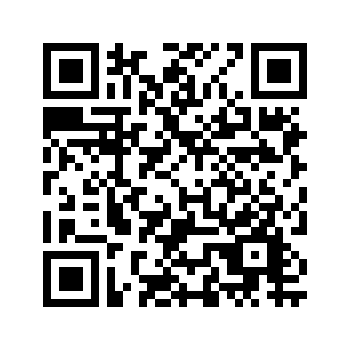 |
Sharing this complete Chatter issue with a friend is simple.
Just let them scan this code into their smartphone!
|